Skip to content
To stay warm during Michigan’s frigid winters, you need a high-quality furnace that’s up to the challenge.
And while there are a number of manufacturers who produce furnaces that are capable of keeping your family comfortable, Trane is always a brand our customers ask about. It’s easy to see why — Trane is a household name that’s synonymous with quality and performance, not to mention reliability (after all, the company’s tagline is “It’s hard to stop a Trane”).
But like every manufacturer, Trane changes its lineup a bit each year. So, to help you understand what options are currently available and whether you should consider having a Trane furnace installed, we’ll break down their 2025 offerings below.
Brand Overview: Who Is Trane?
With a history stretching back more than a century, Trane has established a reputation as one of the most innovative and reliable furnace manufacturers in the entire HVAC industry. In fact, the brand continues to distinguish itself from the competition and offer high-quality furnaces, featuring advanced engineering and providing the kind of long-term reliability that homeowners demand.
Among other things, Trane furnaces are known for running quietly, delivering consistent heat, and lasting longer than the furnaces made by many other manufacturers. And in addition to its commitment to innovation and craftsmanship, the manufacturer also conducts rigorous product testing to ensure every furnace that leaves the factory is ready to perform.
What’s New for Trane Furnaces in 2025?
As mentioned, Trane adjusts its products and overall lineup each year to capitalize on technological advancements and better meet the needs of its customers. In 2025, most of these updates focused on efficiency, comfort, smart connectivity, and environmental responsibility.
Here’s a closer look at the most meaningful changes rolled out in the 2025 line:
Updated High-Efficiency Models & Performance Improvements
Trane has re-engineered several of its gas furnaces to boost overall efficiency and improve heat delivery. Many of the 2025 high-efficiency models have been redesigned to target better AFUE ratings, provide more consistent temperature control, and enjoy improved heat exchanger performance.
These enhancements are intended to help homeowners reduce their monthly energy costs, while also delivering faster, more even heating throughout the home. Some models also feature upgraded insulation and cabinet designs to further reduce heat loss and enhance reliability.
Advancements in ECM Motors, Modulation, & Noise Reduction
This year, Trane has expanded the use of variable-speed and electronically commutated motors (ECMs) across more models in its lineup. These motors use far less energy than earlier motors, and they allow the furnace to operate at a variety of speeds, instead of running at full power all the time.
Trane has also introduced more refined modulation technology to some of their furnaces, which provides users with the ability to adjust the output in smaller increments and enjoy extremely precise temperature control. Combined with improved blower design and vibration reduction, these upgrades have resulted in some of the quietest furnaces Trane has ever offered.
Integration with Smart Thermostats and Home Automation
Trane continues to strengthen smart-device compatibility within its Trane Home and Trane Link ecosystem, as well as most of the popular third-party smart home platforms. In 2025, more Trane furnaces can communicate directly with smart thermostats to optimize performance based on weather, occupancy, and homeowner preferences.
This kind of seamless integration means homeowners can use features like remote diagnostics, performance alerts, and fully automated energy-saving modes, ultimately providing more convenience and a clearer picture of how the furnace is performing.
Updated ENERGY STAR Compliance
The federal ENERGY STAR standards were updated in 2025, and Trane has made the necessary changes to its product lineup to meet or exceed the new criteria. Many of the brand’s newest models now feature improved AFUE ratings, better combustion efficiency, and enhanced airflow control.
These changes not only help homeowners qualify for energy rebates but also ensure long-term compliance with evolving regional efficiency and emissions regulations.

The 2025 Trane Furnace Model Lineup
Having outlined some of the major changes and trends Trane has embraced with its 2025 product line, we can now delve into the actual models available in the Southeast Michigan area. We’ll present all 11 models, organized in the same three-tiered system Trane does.
Premier Systems
The Premier Systems offered by Trane represent the highest level of performance available from the manufacturer. These models feature variable-speed motors, multi-stage or modulating heat, and the most advanced comfort and efficiency technologies.
These furnaces are the perfect option for homeowners who want top-tier energy savings, ultra-quiet operation, and the most precise temperature control available.
- 96 Two-Stage Variable Speed Gas Furnace: The 96 Two-Stage Variable Speed Gas Furnace is designed to deliver consistent comfort by adjusting both heat output and airflow to match your home’s needs. Its variable-speed motor helps reduce temperature swings and operating noise while lowering monthly heating costs.
- 96 Modulating Variable Speed Gas Furnace: The 96 Modulating Variable Speed Gas Furnace offers Trane’s most precise, responsive heating technology, and it adjusts its performance in small increments to maintain ideal temperatures. Paired with communicating controls, it delivers exceptional efficiency and premium comfort.
- 80 Two-Stage Variable Speed Gas Furnace: The 80 Two-Stage Variable Speed Gas Furnace provides enhanced comfort for homes that don’t require a high-efficiency model, and it offers quieter heating than standard 80% furnaces. Meanwhile, its variable-speed blower and two-stage gas valve improve temperature consistency.
- 97 Two-Stage Variable Speed Gas Furnace: The 97 Two-Stage Variable Speed Gas Furnace is one of Trane’s most efficient furnaces, and it delivers reliable warmth with significantly reduced energy consumption. Its advanced design ensures superior temperature control and quieter operation while maximizing long-term savings.
Priority Systems
Trane’s mid-level product tier, furnaces in the Priority System line offer a balanced blend of efficiency, comfort, and value, using two-stage or high-efficiency single-stage heating to provide more consistent warmth than the brand’s basic models can.
These furnaces are a good choice for homeowners seeking a combination of advanced features and affordability.
- 80 Two-Stage Gas Furnace: The 80 Two-Stage Gas Furnace provides more consistent comfort than standard single-stage 80% models by delivering heat at both low and high stages. It’s a dependable, cost-effective option for homeowners who want improved temperature control without upgrading to a high-efficiency system.
- 96 Two-Stage Gas Furnace: The 96 Two-Stage Gas Furnace delivers a strong balance of efficiency, comfort, and value by automatically switching between low and high heat output. With its higher AFUE rating and smoother heating performance, it’s great for homeowners seeking efficient comfort without the premium price tag.
Choice Systems
Trane’s most affordable product line, Choice System furnaces provide reliable heating with single-stage operation and durable construction. They’re designed to deliver dependable comfort and performance while keeping homeowners’ upfront costs low.
These furnaces are ideal for homeowners with tight budgets and those living in relatively mild climates.
- 96 Single-Stage Gas Furnace: The 96 Single-Stage Gas Furnace offers high-efficiency performance in a budget-friendly design, making it appropriate for homeowners who want lower energy costs without paying for advanced features. Its reliable single-stage operation provides dependable warmth with minimal maintenance.
- 92 Single-Stage Builder-Grade Gas Furnace: The 92 Single-Stage Builder-Grade Gas Furnace delivers dependable comfort at an accessible price point, making it popular for new construction homes and budget-conscious upgrades. Its straightforward design provides reliable performance while keeping installation costs low.
- 95 Single-Stage Ultra-Low NOx Gas Furnace: The 95 Single-Stage Ultra-Low NOx Gas Furnace is engineered to significantly reduce emissions while still delivering the kind of efficient, comfortable heat homeowners want. It’s an ideal option for environmentally focused homeowners or regions with strict air-quality regulations.
- 80 Single-Stage Builder-Grade Gas Furnace: The 80 Single-Stage Builder-Grade Gas Furnace offers dependable heating and features durable components designed to last for years. Its quiet, steady operation makes it a practical and economical solution for homeowners who want reliable comfort without unnecessary complexity.
- 80 Single-Stage Gas Furnace: The 80 Single-Stage Gas Furnace provides consistent heating and strong overall value, making it an excellent choice for homeowners seeking a straightforward, dependable system. Its proven single-stage design delivers dependable warmth and low-maintenance performance season after season.
Trane Furnace Installation: Your Contractor Is Just as Important as the Furnace
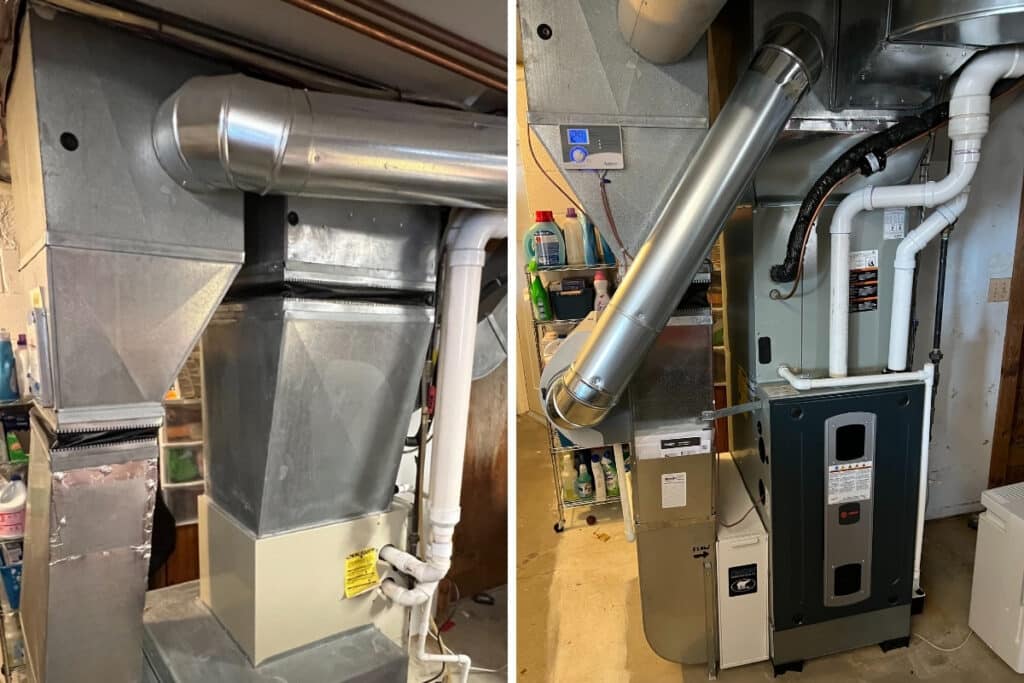
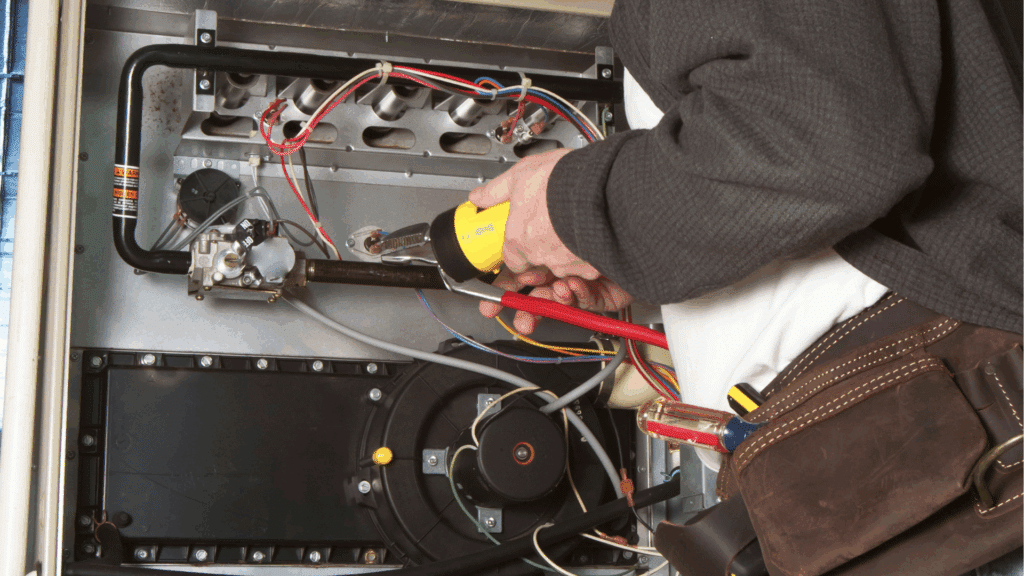
Even the best furnace can’t deliver the best performance unless it’s installed correctly. That’s why it’s not only important to choose the right Trane furnace model but also to work with HVAC experts, like the team at Dynamic HVAC.
A few of the key reasons proper installation is so crucial are outlined below.
Proper Sizing and Manual J Calculations
Accurate sizing is critical for ensuring your new furnace performs as well as it can. It can be difficult for homeowners or novice HVAC techs to determine the ideal size for your home, but one of our HVAC professionals can carry out the important Manual J load calculation.
This calculation considers a number of variables, including your home’s insulation levels, windows, layout, and climate, to determine the precise heating capacity required. Without this step, you may end up with a furnace that short-cycles, runs inefficiently, or fails to provide the kind of comfort you deserve.
Ductwork Considerations
Your furnace isn’t the only HVAC component that will determine your home’s comfort; your duct system also plays a major role in how well a new furnace can heat your home. Properly sized, sealed, and balanced ducts help maximize airflow, reduce noise, and improve efficiency, but unfortunately many homes have inadequate duct systems.
But that’s not a problem when you rely on Dynamic HVAC. Our trained technicians will inspect and adjust the ductwork while installing your new furnace to ensure it can handle the airflow requirements of your selected Trane model.
Installation Mistakes Are Common
Improper installation is not a minor issue. In fact, it can lead to things like higher utility bills, premature equipment failure, or uneven heating. A few of the most common mistakes underqualified technicians make include inappropriate venting, improper gas line sizing, and misconfigured blower settings.
But you don’t have to worry about these things when you rely on our HVAC experts. We’ll ensure that your new furnace is installed correctly, allowing you to avoid problems from the start.

Trane Furnace Installation: FAQ
Still have questions about Trane furnaces, their latest offerings, or the installation process? We’ve rounded up a few of the most common questions our customers have and answered them below.
How much is a Trane furnace installed?
Trane furnace installation typically costs between $4,000 and $14,000, depending on the model you select and the size and characteristics of your house. Fortunately, it’s easy to get a free estimate from your friends at Dynamic HVAC.
Can I install a furnace myself?
Given the potential hazards (such as gas or carbon monoxide leaks) involved, as well as the fact that doing so will void your warranty, homeowners should not attempt to install a furnace themselves. You may not even be able to obtain the necessary permits without a licensed HVAC technician in some municipalities. Instead, it’s much wiser to partner with a certified HVAC contractor.
What is the average lifespan of a Trane furnace?
Like most furnaces, Trane models will often last about 15 to 20 years. However, the exact lifespan you can expect will depend on myriad factors, including your home’s size and ductwork, as well as the specific model you choose.
What is the $5,000 rule for HVAC?
The $5,000 rule is a guideline that helps homeowners decide whether they should have their furnace repaired or replaced. To apply the formula, you’ll multiply the cost of the needed repairs by your furnace’s age in years. If the total is more than $5,000, it’s wiser to simply replace the unit.
Which furnace is better, Trane or Carrier?
Both Trane and Carrier furnaces are high-quality HVAC units that are beloved by homeowners and HVAC professionals alike. However, Carrier is often associated with smart technology and greater efficiency, while Trane furnaces are built like tanks and provide long-term dependability.
Should a 20-year-old furnace be replaced?
Yes, you should consider replacing a 20-year-old furnace, as it’ll undoubtedly be approaching the end of its lifespan.
Trust Dynamic HVAC for All Your Furnace Needs!
Whether you need emergency furnace repairs or you want to replace your existing furnace, you can count on the professionals at Dynamic HVAC. Our HVAC professionals will be happy to visit your home and either analyze your heating needs or diagnose the problem you’re experiencing. From there, they’ll develop a tailored solution and provide you with a free estimate.
For more than 20 years, Dynamic HVAC has been providing the heating and cooling solutions residents in Holly, Oxford, Pontiac, and the rest of Southeast Michigan deserve. Contact us today to schedule your free estimate!
Sources & References
- Trane – “Residential Gas Furnaces”
Provides official specifications, efficiency ratings, feature descriptions, and updated model information for Trane’s 2025 furnace lineup.
https://www.trane.com/residential/en/products/furnaces - ENERGY STAR – “Furnaces”
Outlines the latest ENERGY STAR certification criteria for residential gas furnaces, including updated 2025 efficiency standards and AFUE requirements.
https://www.energystar.gov/products/furnaces - U.S. Department of Energy – “Furnaces and Boilers”
Explains federal efficiency regulations, AFUE standards, and performance guidelines that shape modern high-efficiency furnace design.
https://www.energy.gov/energysaver/furnaces-and-boilers - Air Conditioning Contractors of America (ACCA) – “Manual J Residential Load Calculation”
Defines the industry-standard procedure for sizing residential heating systems, ensuring proper furnace performance, efficiency, and comfort.
https://www.acca.org/standards/technical-manuals/manual-j